Business Consultant in Ghaziabad – Strategic Growth & Business Advisory Services
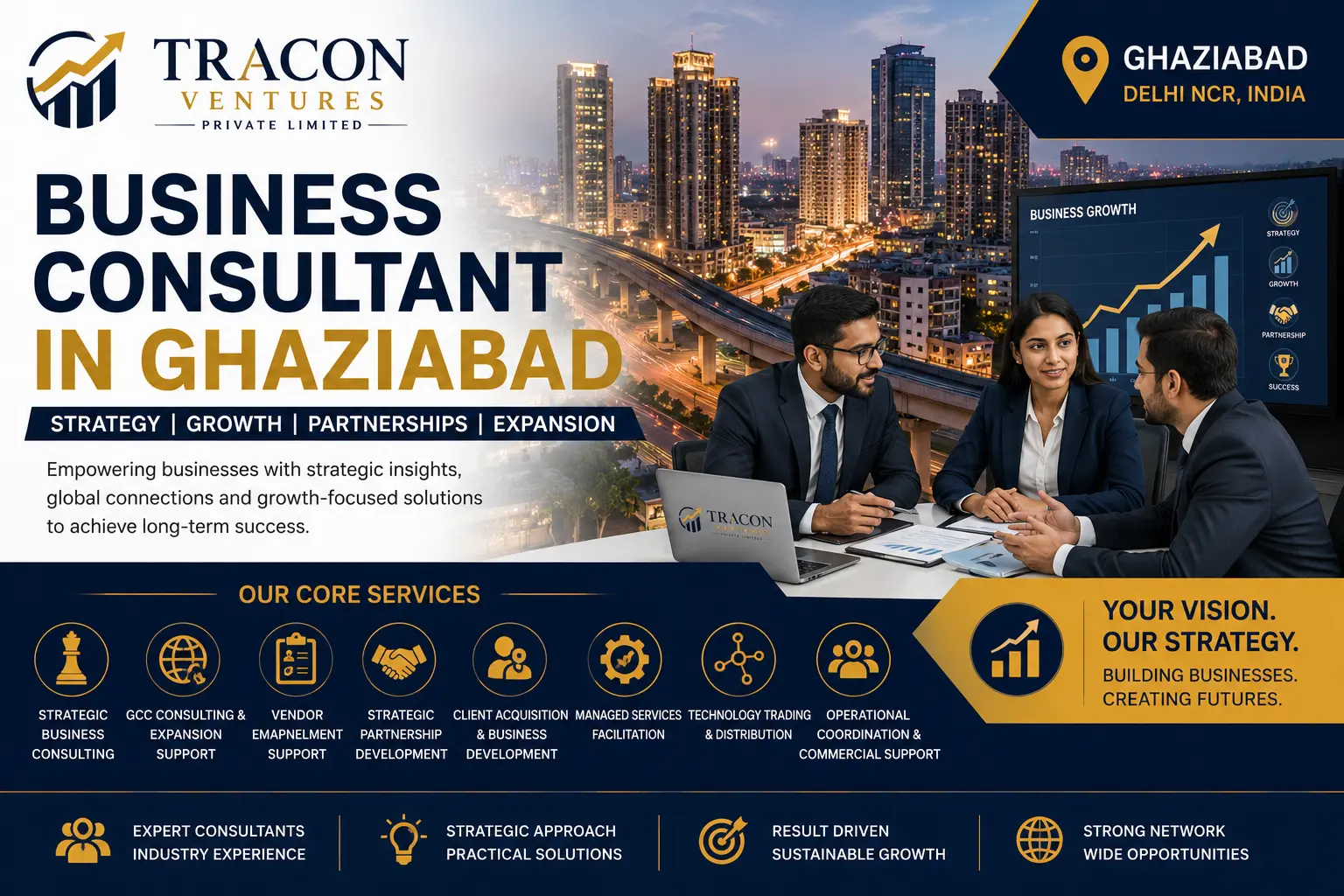
Business Consultant in Ghaziabad : Growing a business requires more than a good product or service. Companies must identify the right markets, develop strategic partnerships, strengthen operations, connect with potential clients and create a practical roadmap for sustainable growth. If you are searching for a Business Consultant in Ghaziabad, Tracon Ventures Pvt. Ltd. provides business consulting and advisory services designed to help organizations navigate growth opportunities, partnerships, market expansion and operational challenges.
With a business-focused approach, Tracon Ventures works with organizations to understand their objectives and develop practical strategies aligned with their market and expansion requirements.
Business Consulting Services in Ghaziabad
Every organization faces different challenges depending on its industry, stage of growth and target market.A startup may need market-entry guidance and strategic connections, while an established business may be looking for expansion opportunities, vendor relationships or new client acquisition channels. Tracon Ventures provides consulting support across areas such as:
- Business Growth Advisory
- Strategic Partnership Development
- Client Acquisition Support
- Technology Trading & Distribution
- Operational Coordination
- Market Expansion Support
The objective is to help businesses move from identifying an opportunity to developing a structured approach for execution.
Strategic Business Consulting in Ghaziabad
Business growth should be supported by a clear strategy.Strategic business consulting helps organizations evaluate their current position, identify potential opportunities and define practical priorities for future growth.Depending on the engagement, consulting may involve evaluating areas such as:
Business Objectives → Market Opportunities → Partnerships → Execution Strategy → Growth
This structured approach can help management make more informed decisions rather than pursuing disconnected opportunities.
Business Growth Consultant for Growing Companies
Growth creates opportunities, but it can also introduce operational and strategic challenges. Businesses may need to determine:
- Which markets should we target?
- Which customers should we prioritize?
- Which partnerships can accelerate growth?
- How should we approach enterprise opportunities?
- What operational support will expansion require?
- How can we build a sustainable business network?
A Business Growth Consultant in Ghaziabad can help management examine these questions and develop a more structured growth roadmap.
GCC Consulting & Expansion Support
India continues to be an important destination for organizations evaluating Global Capability Centre opportunities and business expansion. Companies exploring GCC-related initiatives may require support across market understanding, business coordination, partnerships and expansion planning. Tracon Ventures provides GCC consulting and expansion support for organizations evaluating opportunities and seeking structured assistance for their growth initiatives.The precise scope should be developed according to the organization’s objectives, industry and expansion requirements.
Vendor Empanelment Support
Becoming an approved vendor can create opportunities for businesses seeking to work with larger organizations. However, vendor onboarding and empanelment can involve multiple stages of documentation, positioning and coordination. Tracon Ventures provides Vendor Empanelment Support to help businesses approach relevant opportunities in a more structured manner. Support can focus on understanding requirements, preparing for the process and coordinating relevant business activities according to the opportunity.
Strategic Partnership Development
The right strategic partnership can help a business enter new markets, strengthen capabilities or reach new customers. Tracon Ventures assists organizations exploring Strategic Partnership Development opportunities.
Potential partnerships may involve:
- Business alliances
- Distribution relationships
- Technology partnerships
- Market-entry collaborations
- Service partnerships
- Industry relationships
The goal is to identify partnerships that provide meaningful business value rather than simply increasing the number of connections.
Client Acquisition Support
Finding potential customers is only the beginning of business development. Companies also need a systematic process for identifying opportunities, approaching relevant prospects and building relationships. Client acquisition support can help businesses develop a more structured approach toward:
Target Market → Potential Client → Business Introduction → Engagement → Opportunity Development
For B2B companies, where sales cycles may be longer and involve multiple decision-makers, structured business development can be particularly valuable.
Managed Services Facilitation
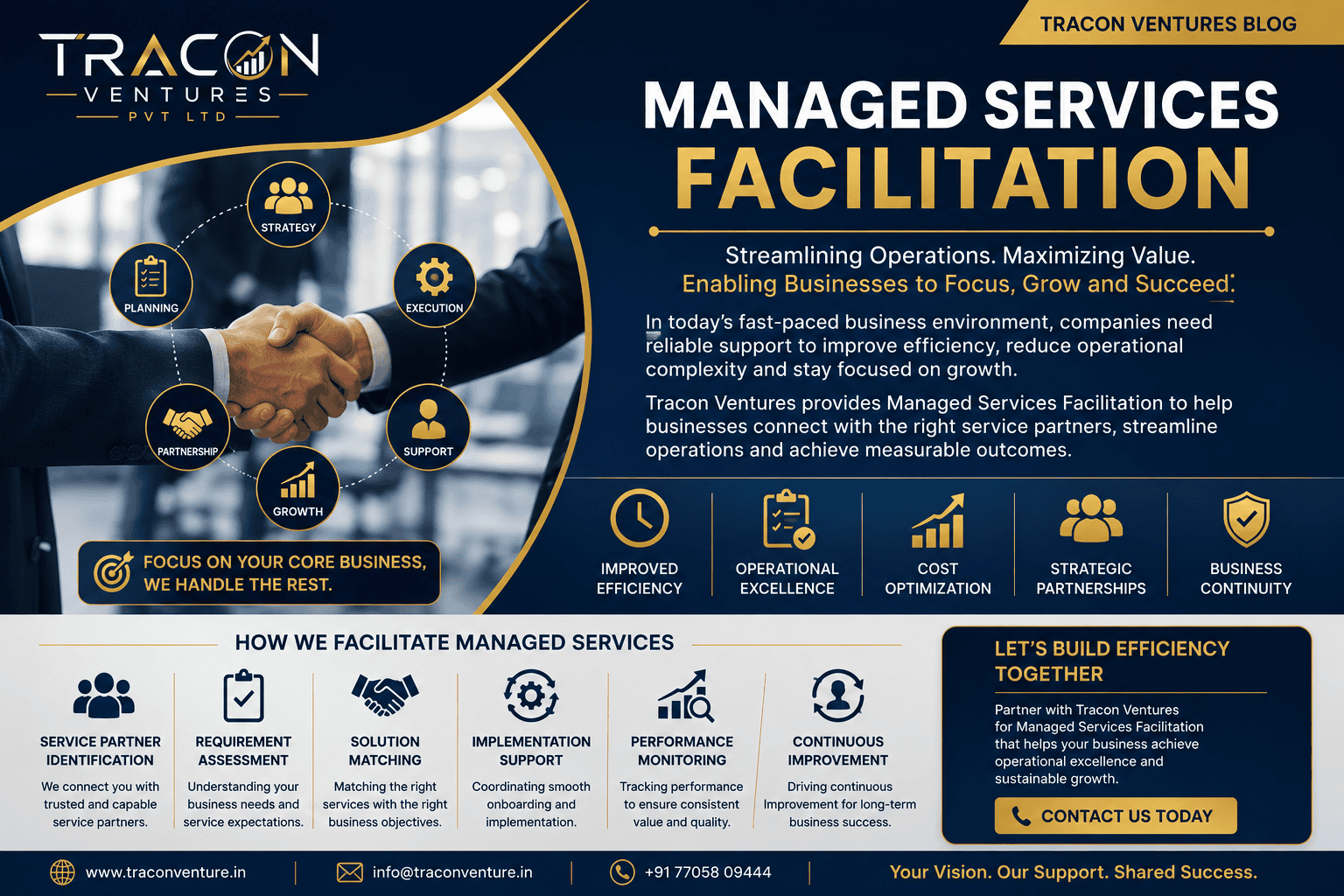
As organizations expand, they may require additional operational capabilities without building every function internally. Managed services facilitation can help organizations explore appropriate service relationships and coordinate business requirements with suitable capabilities.Tracon Ventures supports businesses in identifying and facilitating relevant managed-service opportunities according to the nature of the requirement.
Technology Trading & Distribution
Technology businesses often need strong commercial channels in addition to good products. Tracon Ventures supports technology trading and distribution opportunities where businesses require market access, commercial relationships or distribution-oriented coordination. This can be particularly relevant for companies seeking to strengthen their presence in new markets or business segments.
Operational Coordination
Business expansion often involves multiple stakeholders. Without effective coordination, even a strong strategy can become difficult to execute.Operational coordination can help create better alignment between:
- Business teams
- Partners
- Vendors
- Clients
- Service providers
- Other stakeholders
A consultant can help keep important activities aligned with the broader business objective.
Why Businesses Need a Professional Business Consultant
Consulting should not simply produce recommendations that remain in a presentation.Effective business consulting should help management understand opportunities, identify priorities and develop a clearer route toward execution.A professional consultant can bring an external perspective to important questions involving:
Business Strategy
Evaluate objectives and define priorities.
Market Expansion
Identify and assess opportunities for entering or expanding within markets.
Business Partnerships
Explore relationships that can create strategic value.
Client Development
Build a more systematic approach to B2B opportunities.
Operational Planning
Consider how strategy can translate into practical business activity.
Business Consulting for Startups
Startups frequently need to make important decisions with limited time and resources.
Consulting support can help founders evaluate:
- Market positioning
- Growth opportunities
- Business partnerships
- B2B client acquisition
- Expansion strategy
- Commercial relationships
The objective should not be to add unnecessary complexity but to help founders prioritize the opportunities most relevant to their business.
Consulting for Established Businesses
Established organizations may require consulting for a different set of challenges. For example, they may want to:
- Enter new markets
- Develop new enterprise relationships
- Strengthen vendor networks
- Identify strategic partners
- Explore GCC opportunities
- Improve business coordination
- Develop additional commercial channels
Consulting can provide management with focused support around these specific initiatives.
Why Choose Tracon Ventures Pvt. Ltd. as a Business Consultant in Ghaziabad?
Strategic Approach
Business opportunities are evaluated in the context of the organization’s objectives rather than through a one-size-fits-all consulting model.
Business Growth Focus
The consulting approach focuses on opportunities that can contribute to sustainable business development.
Partnership Development
Tracon Ventures supports businesses exploring strategic relationships, collaborations and commercial partnerships.
Vendor Empanelment
Organizations can receive structured support while exploring relevant vendor opportunities.
GCC & Expansion Consulting
Businesses evaluating expansion and GCC-related opportunities can receive strategic and coordination support.
B2B Business Development
Tracon Ventures works with organizations seeking structured client-acquisition and business-development opportunities.
Execution-Oriented Support
Strategy is most valuable when it can be translated into practical business activity.
Business Consultant in Ghaziabad for B2B Growth
Ghaziabad’s proximity to Delhi NCR places businesses within one of India’s important commercial regions.
Organizations operating from Ghaziabad can access opportunities across Delhi, Noida, Greater Noida, Gurugram and other NCR business centres.
However, a larger market also creates stronger competition.
A structured consulting approach can help businesses identify where they should focus their resources and which opportunities best match their capabilities.
Business Consulting in Ghaziabad & Delhi NCR
Tracon Ventures Pvt. Ltd. supports organizations looking at opportunities in Ghaziabad and the broader Delhi NCR business ecosystem. Depending on the engagement, consulting can support organizations seeking:
Business Strategy → Market Expansion → Partnerships → Vendor Opportunities → Client Acquisition → Execution
This creates a connected approach to business development rather than treating each activity independently.
How to Choose the Right Business Consultant in Ghaziabad
Before selecting a consultant, businesses should consider:
- Does the consultant understand your business model?
- Is the approach customized to your objectives?
- Can they assist with strategic partnerships?
- Do they understand B2B business development?
- Can they support vendor and enterprise opportunities?
- Is market expansion part of their expertise?
- Can they support coordination during execution?
- Is the engagement focused on practical business outcomes?
The right consultant should help clarify the path forward rather than simply provide generic business advice.
Looking for a Business Consultant in Ghaziabad?
If you are looking for a Business Consultant in Ghaziabad, Tracon Ventures Pvt. Ltd. can help your organization explore business growth, strategic partnerships, GCC expansion, vendor empanelment, client acquisition and other business-development opportunities. Whether you are a growing company seeking new markets or an established organization exploring strategic expansion, a structured consulting approach can help turn business objectives into a clearer roadmap.
Connect with Tracon Ventures Pvt. Ltd. to discuss your business objectives and explore an appropriate consulting engagement.
Frequently Asked Questions
What does a business consultant in Ghaziabad do?
A business consultant can help organizations evaluate strategy, growth opportunities, market expansion, partnerships, client acquisition and other business-development requirements.
Does Tracon Ventures provide strategic business consulting?
Yes. Tracon Ventures Pvt. Ltd. provides strategic business consulting and advisory support according to the requirements of the organization.
Does Tracon Ventures provide GCC consulting?
Tracon Ventures supports organizations exploring GCC consulting and expansion opportunities according to their business objectives.
Can you help with vendor empanelment?
Tracon Ventures provides vendor empanelment support for businesses exploring relevant corporate and commercial opportunities.
Do you provide strategic partnership development?
Yes. Strategic partnership development is one of the business areas supported by Tracon Ventures.
Can Tracon Ventures assist with client acquisition?
Tracon Ventures supports businesses seeking a more structured approach to B2B client acquisition and opportunity development.
Do you provide consulting outside Ghaziabad?
Consulting requirements can extend across Delhi NCR and other markets depending on the nature and scope of the engagement.
Is business consulting suitable for startups?
Yes. Startups can use consulting support for areas such as market strategy, partnerships, B2B client acquisition and expansion planning.